


Trend Report
The Period Pivot
Tapping the ROI of Supporting Period Health in the Workplace
RMH Compass Trend Reports deliver timely insights drawn from the RMH Compass Performance Standard, helping employers understand where they stand and identify practical steps to strengthen reproductive, maternal and parental health support across their workforce.
Executive Summary
Managing period health is a routine reality for millions of employees, yet workplace infrastructure rarely reflects this basic need. While cultural awareness around women’s health is increasing, many workplaces still lack the operational support and policy clarity that allow employees to manage their periods without disruption.
With over two years of employer policy data in hand, Reproductive & Maternal Health Compass (RMH Compass) has found:
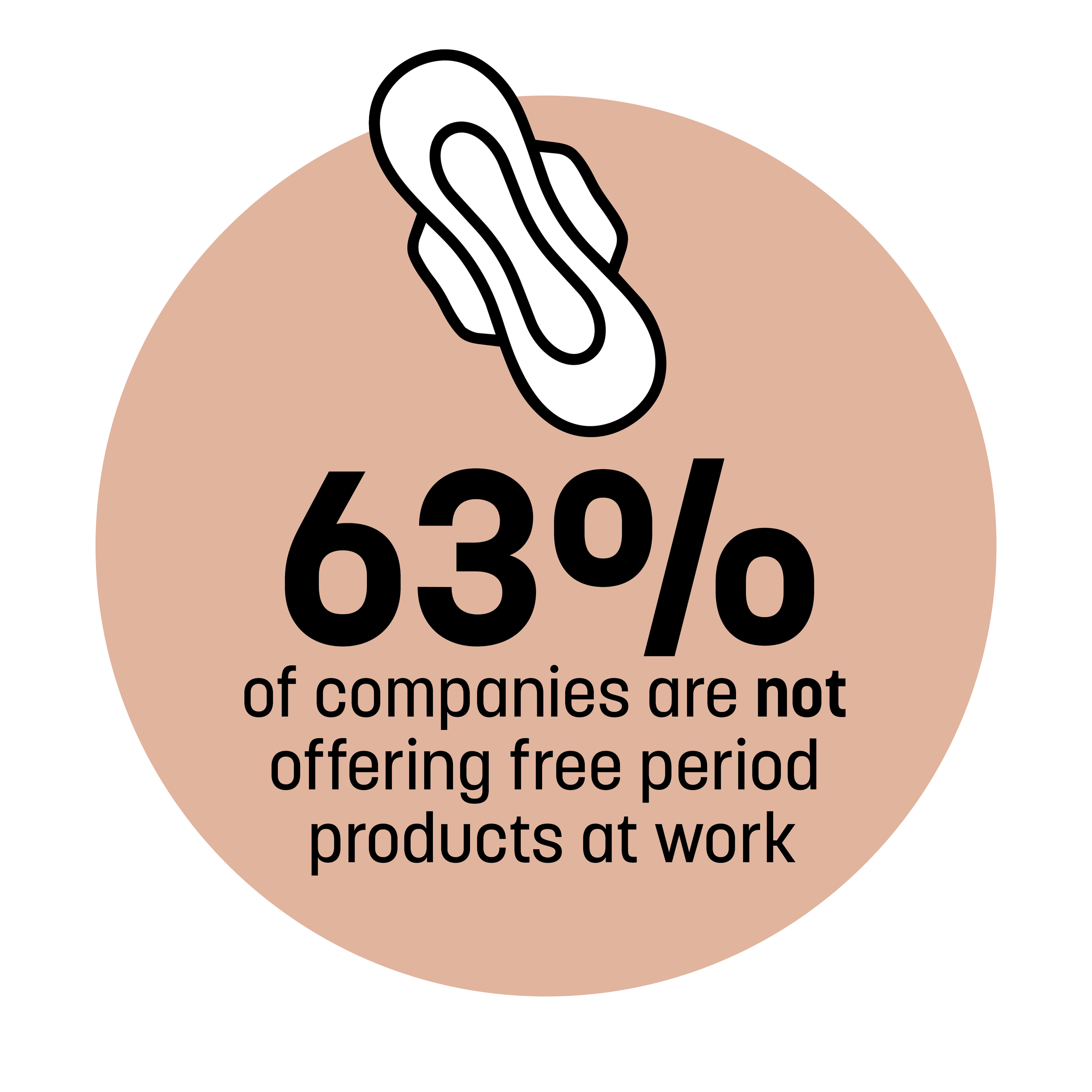
63% of employers do not provide free period products in workplace bathrooms. This leaves employees to manage a common health need without basic workplace convenience and accommodation, creating avoidable disruptions to the workday.
Companies rarely – if ever – reference period and menstrual symptom management within their workplace policies. Instead, employees must determine for themselves whether sick leave applies, rely on individual managers to interpret policies on a case-by-case basis, or continue working despite discomfort. The resulting “presenteeism”—where employees suffer through work while unwell—reduces productivity and performance even when employees are physically present.
Many employers have made progress in supporting the reproductive, maternal, and parental health of their workforce through benefits such as family formation coverage, prenatal care, and paid parental leave. Yet the most frequent reproductive health experience in the workplace—managing periods and menstrual health symptoms—remains largely absent from workplace infrastructure and policy design.
There is a strong business case for supporting employees’ period health through thoughtful workplace design. Research shows that 86% of women have started their period unexpectedly in public without the supplies they need. Easy operational improvements, such as providing period products or clarifying paid leave policies, can reduce workplace disruptions, improve employee productivity, and strengthen retention. These low-cost improvements represent one of the most cost-effective workforce investments employers can make, boosting productivity and employee satisfaction while generating meaningful returns on a relatively small operational investment.
This report examines how employers are currently responding, where gaps remain, and what organizations can do to better support employees through practical, high-impact actions.
Interested in receiving more data and insights like this in your inbox?

Menstrual and Period Care in the Workplace: An Ignored, but Common Need
Menstrual cycles affect a significant portion of the workforce for decades of their professional lives. An estimated 42 million women in the United States experience painful menstrual symptoms, and roughly 3.5 million struggle to function for one to two days each month due to the severity of their symptoms.
In some cases, these symptoms are linked to more serious underlying health conditions. Endometriosis affects approximately 10% of American women between the ages of 25 and 45, often causing severe pain, abnormal bleeding, and fertility complications. An estimated 26 million Americans live with fibroids, which can cause heavy bleeding, chronic pain, and other symptoms that interfere with daily activities, including work.
The condition also reveals significant health disparities. Nearly 25% of Black women between 18-30 are estimated to have fibroids; by age 35 that number rises to roughly 60%. Fibroids are more likely to recur or cause complications, which can intensify the impact on daily life and work. Other chronic menstrual conditions, including polycystic ovary syndrome (PCOS), can also contribute to severe symptoms that disrupt normal routines and workplace productivity.
Despite the frequency and potential severity of these experiences, menstrual health and related reproductive health challenges remain largely absent from workplace policies and infrastructure. Change hasn’t happened in part because these are personal health matters and employees often manage symptoms quietly without requesting formal support. In fact, only 20% of women surveyed felt comfortable discussing menstrual health needs with their managers.

The result is that a sizable portion of the workforce may be managing chronic, recurring health symptoms that affect their ability to work comfortably while workplace policies and infrastructure rarely account for these common health needs.
For employers, this gap presents a clear opportunity. Easy operational improvements, such as providing period products in restrooms or clarifying leave policies require minimal investment but can improve employee comfort, productivity, and workplace culture. Organizations that address these needs proactively signal that they understand the realities of their workforce and are committed to creating supportive and inclusive workplaces.

Small Investments,
Big Impact
Opportunity #1:
Free Period Products in Workplace Restrooms
Leveraging RMH Compass’ unique business practice data – collected over the past two years – reveals a significant gap in one of the most basic forms of workplace support. 63% of employers evaluated do not provide free period products in workplace bathrooms.
Despite how common these situations are, period product access is often treated as an optional amenity rather than a standard workplace resource. For employers looking to strengthen support across the reproductive and maternal health spectrum, providing period products represents one of the most immediate opportunities for improvement.
Research shows that 86% of women have started their period unexpectedly in public without the supplies they needed. Additionally, 62% have left work to purchase supplies and 53% have asked someone to borrow products, creating unnecessary stress and distraction during the workday.
Providing period products helps prevent these disruptions while reducing lost time and strengthening employee satisfaction. Because periods are a routine experience for many employees over decades of their professional lives, access to basic products represents a small operational investment that can meaningfully improve the day-to-day employee experience.
“On my first day back in the office, I found myself scrambling for a tampon because my period decided to make a surprise visit. Imagine my joy (and relief, honestly!) when I walked in the bathroom and saw the Aunt Flow dispenser."

Quantifying Impact:
An ROI Calculator for Workplace Period Support
When an employee has to take time to leave the office or ask a colleague for period products, it disrupts their focus and reduces productivity. Avoiding this productivity loss creates a strong business case for adding free period products in all of your workplace restrooms. RMH Compass developed the ROI Calculator for Free Period Products, a tool that helps employers estimate the costs of and return on investment of providing period products across their facilities.
This first-of-its-kind calculator leverages existing research about the impact and costs of period care in the workplace to generate custom data insights for employers. Using headcount, average hourly wage, and facilities data, the calculator generates an estimate of annual cost to provide free period products and the productivity impact of the benefit.
The calculator is fully customizable to your workforce and facility size, giving employers the most accurate ROI estimate for their firm. For example, a company with 50 female employees using a simple dispensing method such as baskets can expect an initial investment of approximately $370, yet gets a 250% ROI in productivity gains in the first year alone. Future years see even greater productivity gains and higher ROI.
Operational and Cost Considerations
Based on conversations with employers, RMH Compass has found that rolling out free period products can be more challenging for employers with multiple locations, production facilities, or retail locations. Often, corporate teams have the benefit in their offices, but aren’t sure whether the benefit has been implemented across all physical locations. This tells us that there is willingness to offer the benefit, but some basic operational hurdles exist.
We reached out to a leading period products provider, Aunt Flow, to ask what advice they can offer employers who want to provide period products but are challenged by complex facilities structures or geographically distributed teams.
Aunt Flow’s experience supporting multi-site employers has found that the biggest barrier is perceived complexity rather than actual feasibility. In practice, successful rollouts come down to clear roles and responsibilities coupled with strong internal communication. Logistically, distribution and coordination across multiple sites is very manageable with the right structure in place. Organizations such as TJX, Justworks, Urban Outfitters, and Nucleus Network have successfully rolled out programs across multiple locations by leveraging direct-to-site shipping, centralized ordering systems, and standardized resources for on-the-ground teams.
One concern employers sometimes raise is whether workers will stockpile products if they are freely available. In practice, this has not proven to be a long-term issue. There may be a short adjustment period in the first few weeks when employees take a few extra products, but once it is clear that dispensers are consistently stocked and here to stay, behavior quickly normalizes. Employees tend to use period products the same way they use any other essential restroom supply.

Most importantly, these programs contribute to a more supportive workplace culture. A 2025 study found that when free period products were made available at work, over ninety percent of employees reported greater emotional satisfaction, seventy percent perceived improved concentration, and 65 percent experienced improved mental well-being. Whether starting small or scaling quickly, organizations that prioritize clear communication, defined ownership, and simple logistics consistently see smooth implementation and meaningful employee impact.
As Meaghan Sullivan, Senior Portfolio Marketing Manager at Google, an Aunt Flow client, shared: “It makes you feel like your company cares about you and impacts your well-being. You can show up at work proud to be yourself and proud to be here.”
Interested in receiving more data and insights like this in your inbox?
Solution Spotlight: Aunt Flow
Aunt Flow was founded on a simple premise: if toilet paper is offered for free in public restrooms, period products should be as well.
As a woman-owned social enterprise, Aunt Flow partners with thousands of organizations to provide scalable solutions for workplace period product access.
Aunt Flow works with employers to identify appropriate restroom locations, install product dispensers, and establish supply management processes across facilities. Many programs begin with a pilot, allowing organizations to introduce product access in a limited number of locations, understand usage patterns, and gather employee feedback before expanding access more broadly.
Opportunity #2:
Integrating Menstrual and Period Care Management into Worker Policies
The lack of recognition of menstrual health in worker policies stands in contrast to how employers increasingly address other aspects of health and well-being.
RMH Compass data reflects this gap in workplace leave policies: none of the company policies evaluated in the past two years have any reference to menstrual health support. This oversight is remarkable given that one-in-four company leave policies do reference fertility treatments, prenatal appointments, and other reproductive health needs.
Instead, most organizations rely on general sick leave policies or leave it up to individual managers to interpret policies on a case-by-case basis when employees need flexibility to manage symptoms associated with their menstrual health. While this approach may appear flexible, failure to address a common health need places the burden on employees to advocate for themselves or ignore their health needs. It also creates uncertainty for managers around what accommodations can be made.

Emerging legal risks add another dimension to this issue. A nascent body of case law is recognizing the impact of reproductive health conditions on workers as a disability issue. Conditions such as endometriosis, fibroids, and severe menstrual disorders have been recognized as serious health conditions that can qualify for workplace accommodations or disability protections in certain circumstances. Recent legal cases have highlighted situations where employers were found to have discriminated against or failed to make accommodations, signaling growing scrutiny around how employers address reproductive and menstrual health needs within workplace policies.
Enhancing Paid Leave Policies to Support Reproductive & Maternal Health
While few organizations currently reference menstrual cycle symptoms within leave policies, many employers are recognizing that strengthening policies around reproductive and maternal health is good business.
Addressing this gap does not require creating new leave categories. Instead, employers can strengthen existing paid leave policies by clarifying that time off may be used for reproductive, maternal, and parental health needs. A best-in-class policy references that paid sick leave can be used for managing menstrual symptoms, attending fertility or prenatal appointments, or managing menopause-related health needs.

RMH Compass has developed an action-oriented resource – Putting It Into Practice: Enhancing Sick Leave Policies to Support Reproductive & Maternal Health– to help employers adopt better policies. The resource outlines specific steps to strengthen sick leave policies, including building leadership awareness, aligning HR and legal teams on policy design, updating employee handbook language, training managers on consistent implementation, and communicating policy updates clearly to employees.
Organizations find that small updates to policy language remove ambiguity for workers, provide clarity for people managers, and generate significant worker goodwill. Without any dollars spent investing in new benefits, employers are able to shift workplace culture, resulting in higher employee satisfaction and engagement, improving productivity, lowering turnover and attracting the best talent. The ROI of these investments is clear.

Turning Insight Into Action: How RMH Compass Can Help
Organizations that strengthen support for employees managing their period health begin by understanding how their current policies, benefits, and workplace practices align with best-in-class standards for reproductive, maternal, and parental health.
The RMH Compass Performance Standard evaluates how employers support the full spectrum of reproductive, maternal, and parental health through their health plans, workplace policies, and work environment.
The RMH Compass framework examines employer practices across several interconnected areas of impact, including reproductive health support across the life cycle, policies that support family formation and parental health, workplace conditions that influence employees’ quality of life at work, and the accessibility, transparency, and privacy of workplace benefits.
Leveraging RMH Compass benchmarks, organizations are able to:
Identify No Cost, High-Impact Opportunities
RMH Compass insights focus on no-cost tweaks to policies and workplace practices coupled with policy resources and implementation guides designed to make implementation easy for HR leaders. The ROI from worker productivity and satisfaction generated by these small changes create a big impact.
Maximize Value of Your Current Benefits
Valuable benefits included in your health plan often go unused because they are difficult for employees to find or understand. RMH Compass provides data-informed strategies to identify and enhance utilization of benefits that don't change cost.
Bridge the Worker/Benefits Information Asymmetry
RMH Compass Pathfinders are designed to support workers with needed benefits information through critical life-cycle transitions, helping them quickly identify the benefits and support available to them when they need it most,mitigating the high costs of turnover and lost productivity. These are customized, worker-facing resources that provide direct support for:
Pregnancy & Postpartum Support (Improving health and wellness during pregnancy results in lowered health complications and absenteeism)
Return-to-Work Support (Improving retention for returning parents)
Menopause Transition Supports (Retaining senior-level talent during peak productivity years)
Interested in receiving more data and insights like this in your inbox?

About the Data
Findings in this report are drawn from organizations evaluated through the RMH Compass Performance Standard, a proprietary framework that evaluates how employers support the full spectrum of reproductive and maternal health through their health plans, benefits, workplace policies, and overall work environment.
The insights presented reflect patterns observed across a diverse group of U.S.-based employers spanning industries, company sizes, and geographic regions.
For more information about the RMH Compass Performance Standard or to learn how your organization can participate, please contact info@rmhcompass.org.